Two audience profiles
Audience 1: High School Students (Biology/Psychology Enthusiasts)
Background & Knowledge Level
High school students who have taken advanced courses (e.g., AP Biology or AP Psychology) are just starting to learn more advanced ideas about how the brain works. They might know about “neurons,” “neurotransmitters,” and “mental health,” but they likely have not been extensively exposed to systems like predictive coding or dopaminergic signaling. Their education is generally curiosity driven, visually focused, and experiential.
Values & Interests
They are an audience in constant wish for further exploration. They care about how the brain works, how conditions develop, and what is being learned in science to make us healthier. They might be in science clubs, studies, or mental health learning groups. They like practical application, career potential, and concerns that touch an emotional chord or social persuasive influence.
Why They’re a Good Audience
Introducing this research to high school students has the potential to inspire the next generation of neuroscientists and clinicians. It also helps destigmatize mental illness at an early stage. Since most teens have already learned about schizophrenia (perhaps in class or through the media), making the science correlate with the true experience of hearing voices makes the material meaningful and pertinent.
Communication Strategy
To teach about this topic, you’d avoid big jargon and substitute metaphors and analogies. An educational poster would work well here. It can visually depict how normal prediction is made versus what happens in schizophrenia. Brain diagrams with color-coded pathways, tshow of incorrect predictions, and simplified timelines showing symptom onset would bring the concepts to life.
Audience 2: Maria, 12 years old middle school student
Knowledge level: Knows the names of different type of mental disorder
Interests: drawing, animation
Concerns: Why does her grandma get scared or happy all of a sudden while talking to herself.
Preferred genre: Comedy, comic, short videos
Preferred medium: Visual content.
Urgency: Schizophrenia is a mental illness in which people hallucinate into thinking someone is talking to them and often get misunderstood by people arould them.It makes things difficult for them like holding a job, maintaining relationships, and even performing basic self-care tasks. Which is why people with schizophrenia need our help. Teaching this concept early on encourages sympathy for individuals with mental illness and lessens stigma. Early exposure to de-scientized mental health concepts can create a better informed, more empathetic attitude as children grow and are subsequently exposed to these topics in more complex fashion later on.
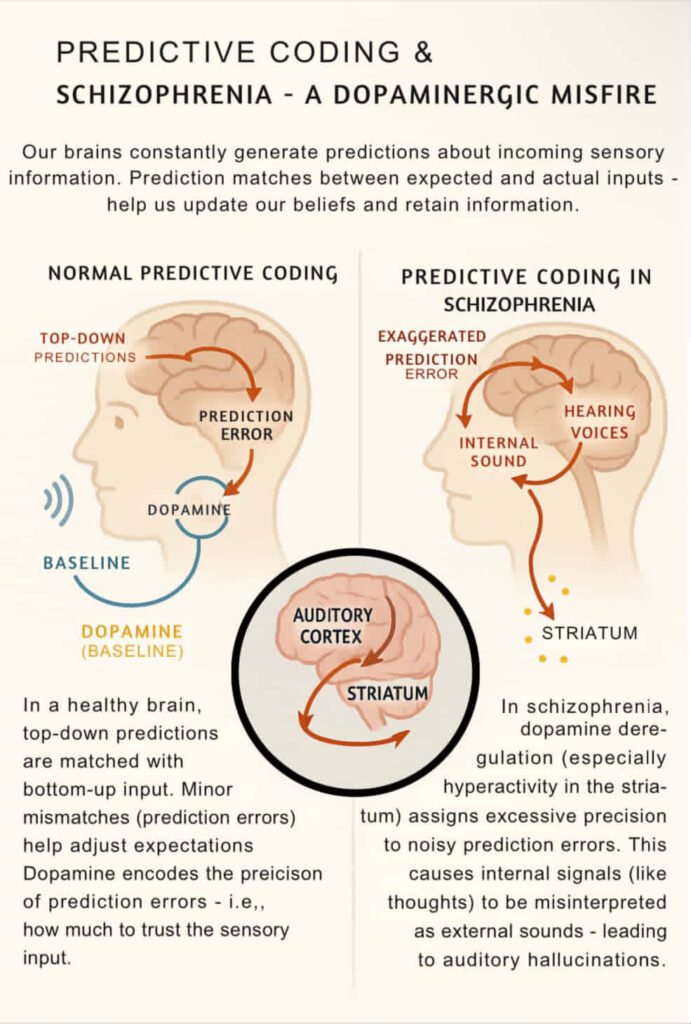
Figure 1. The creative genre piece for the first audience, the high school students with a passion for biology and psychology
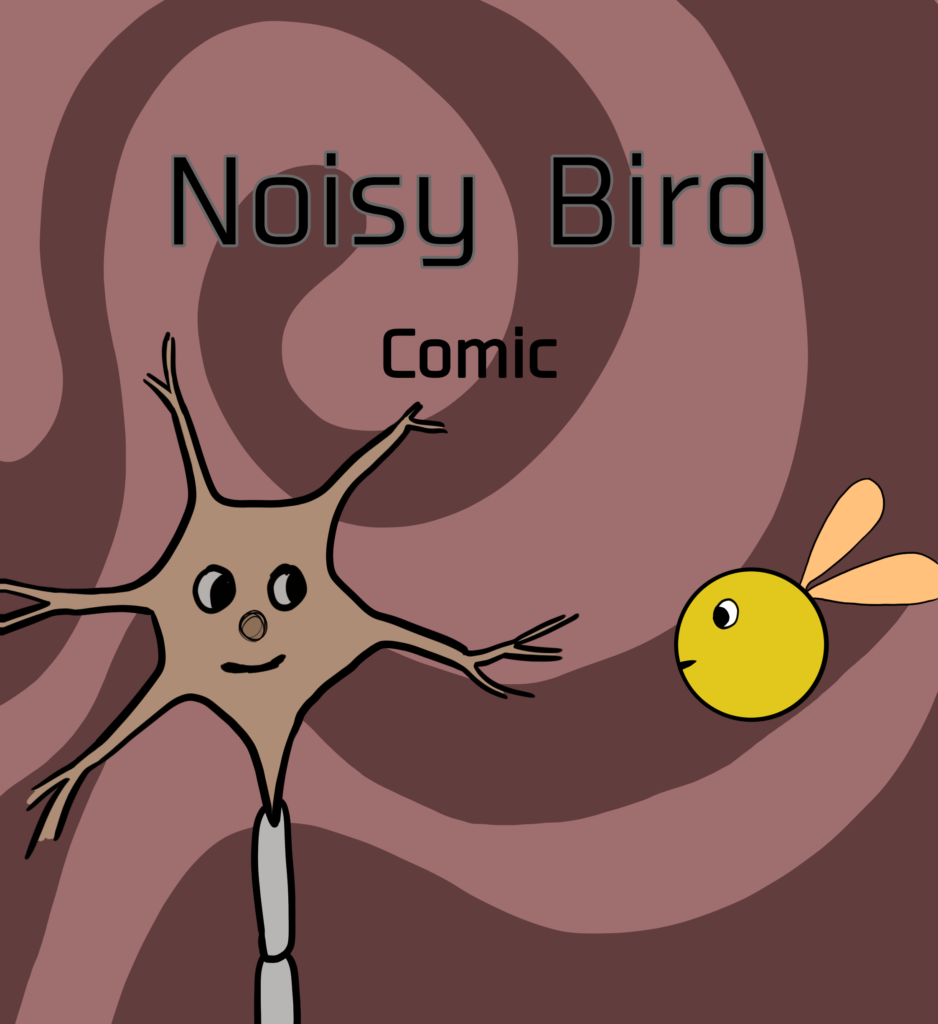
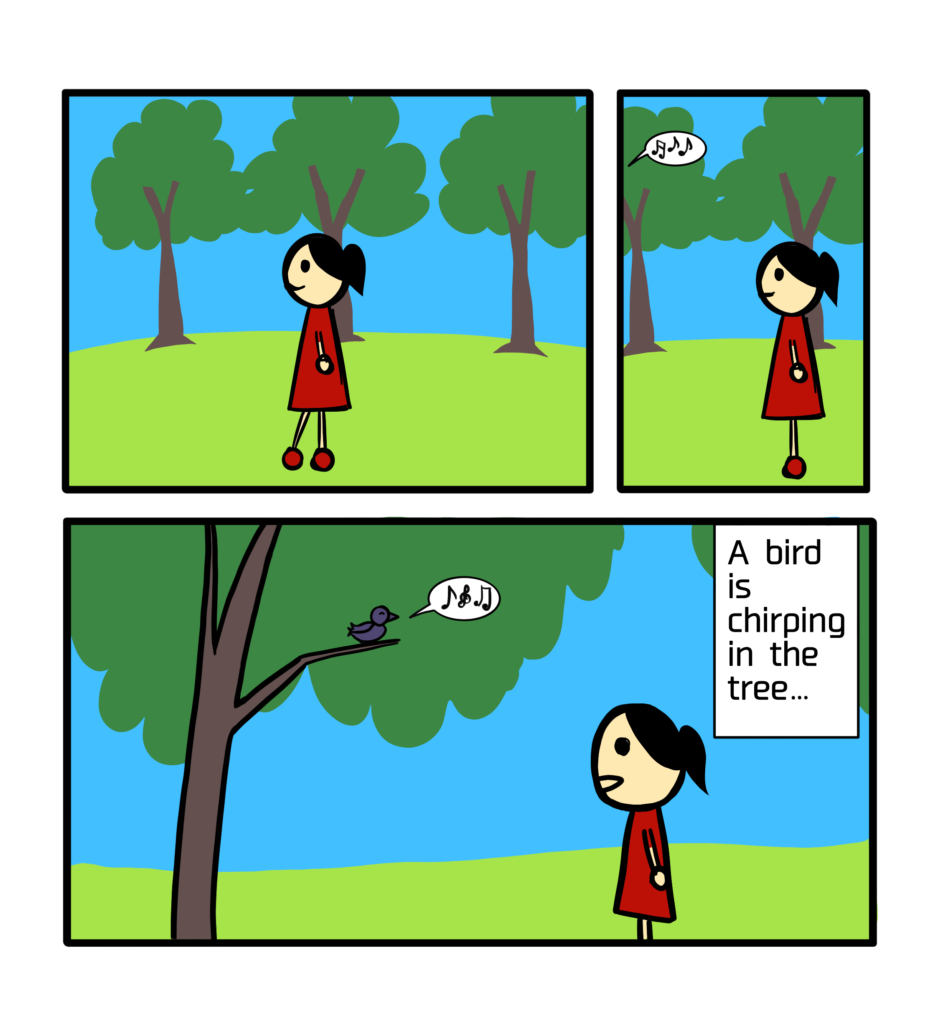
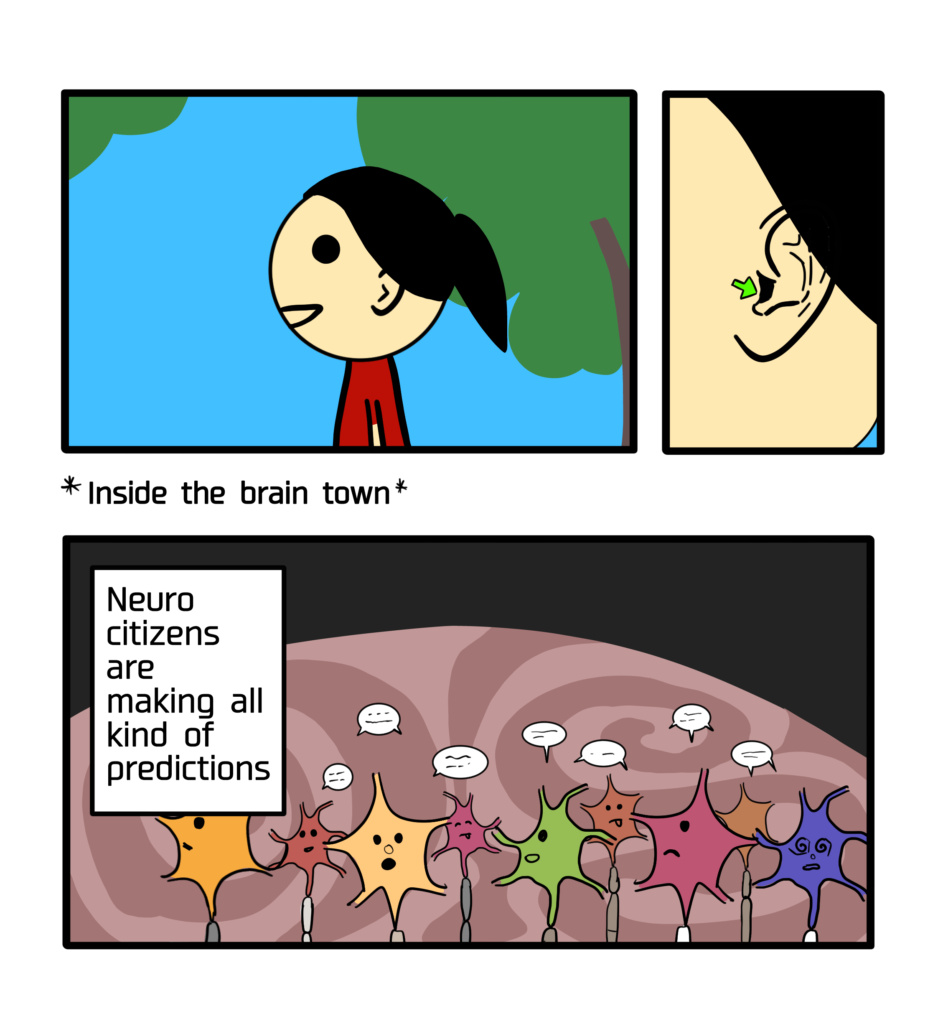
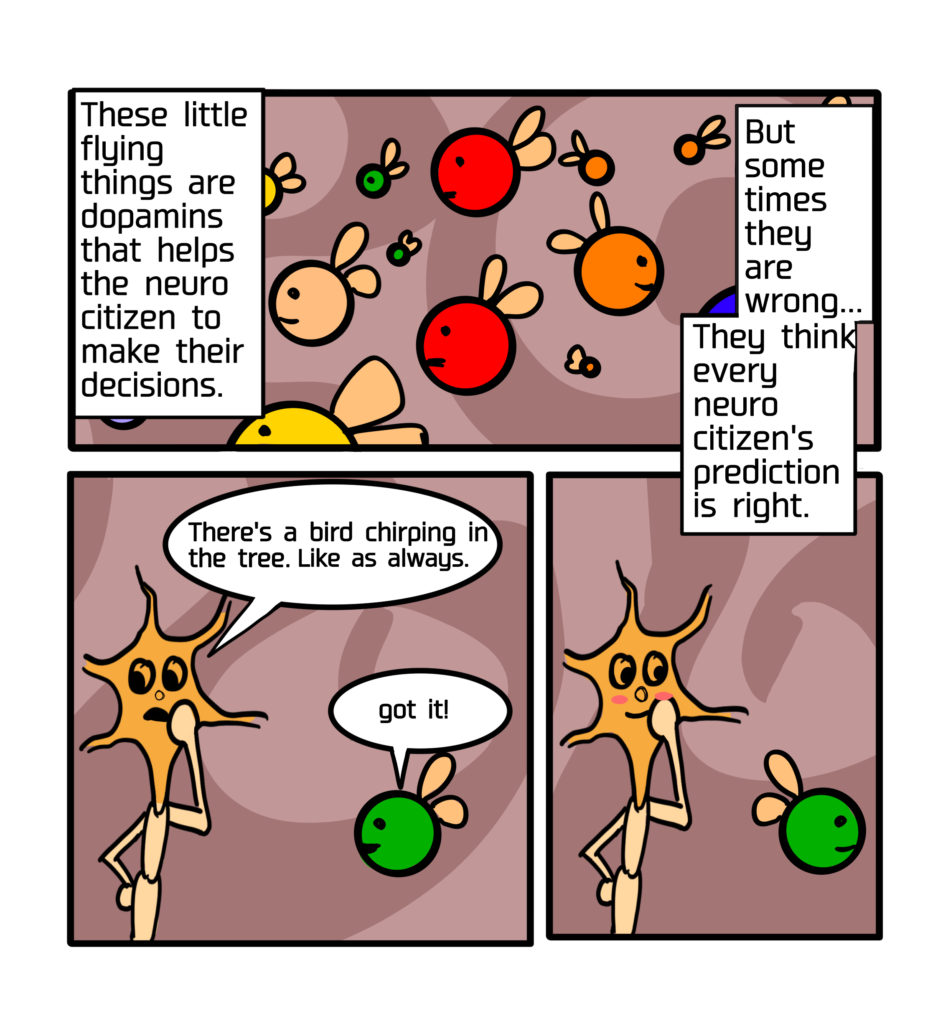
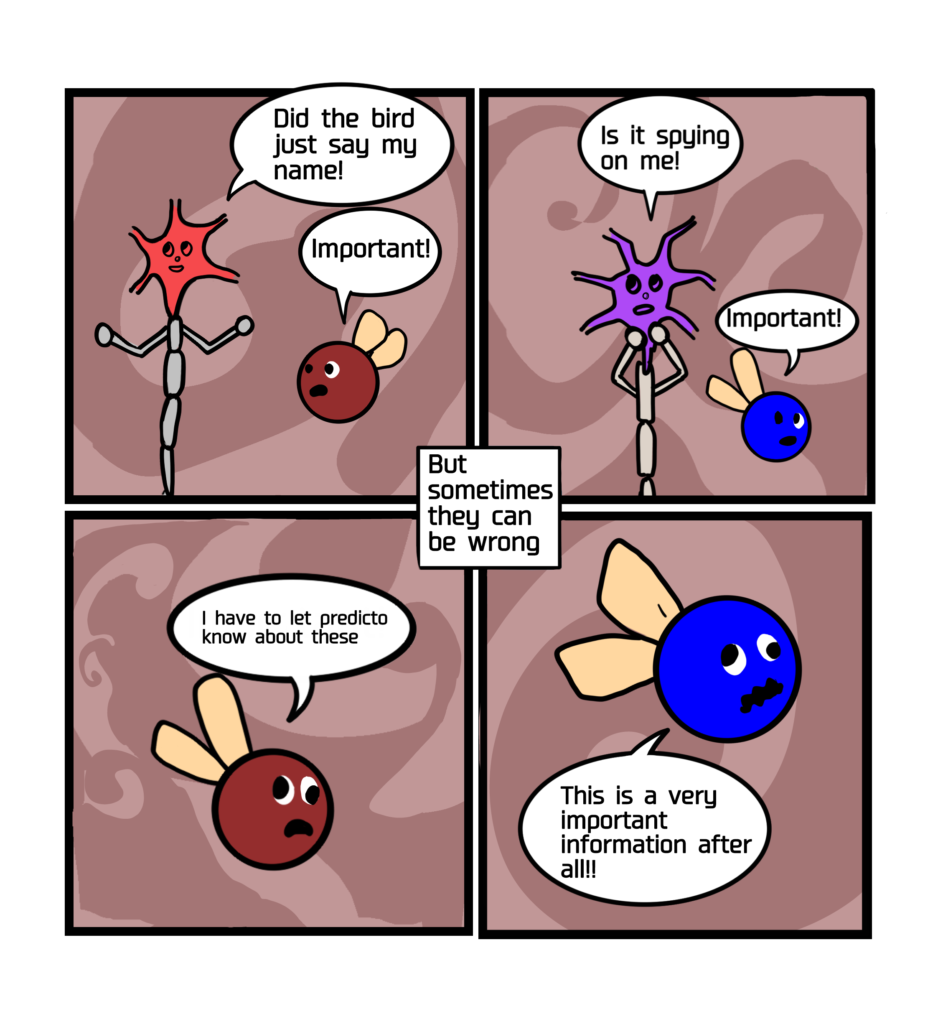
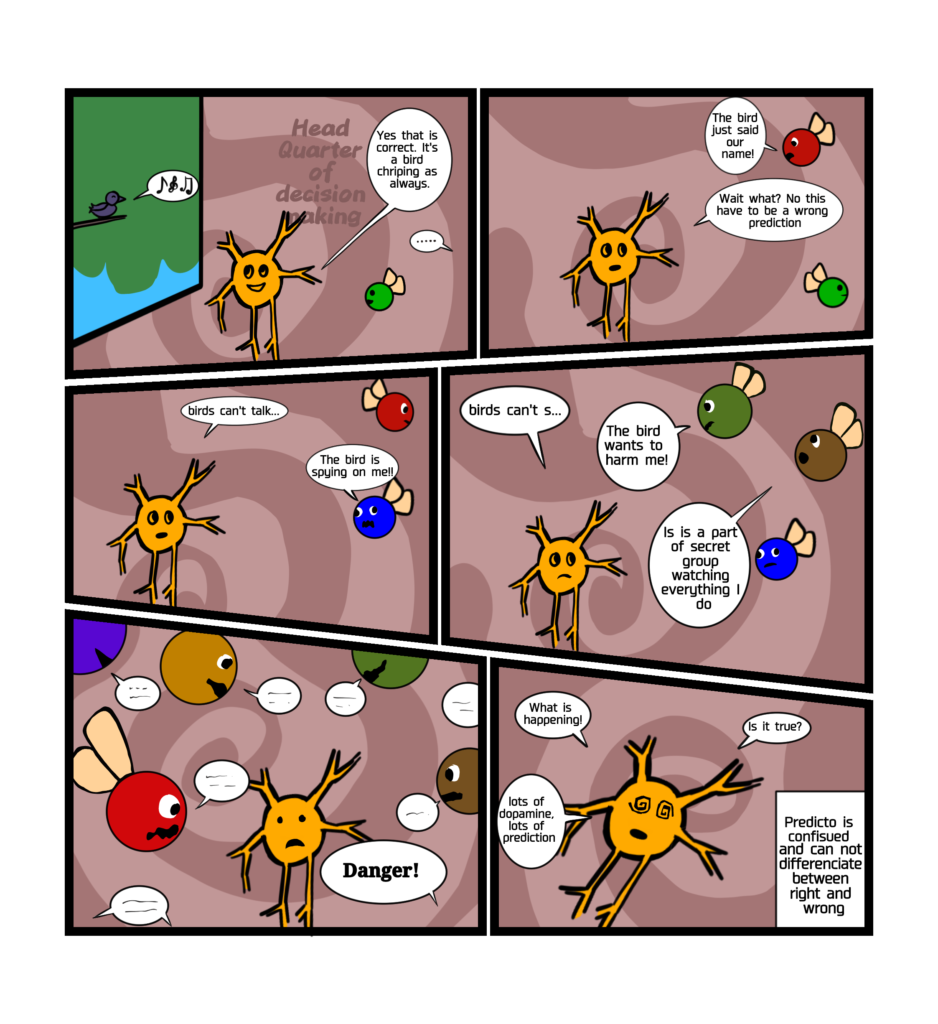
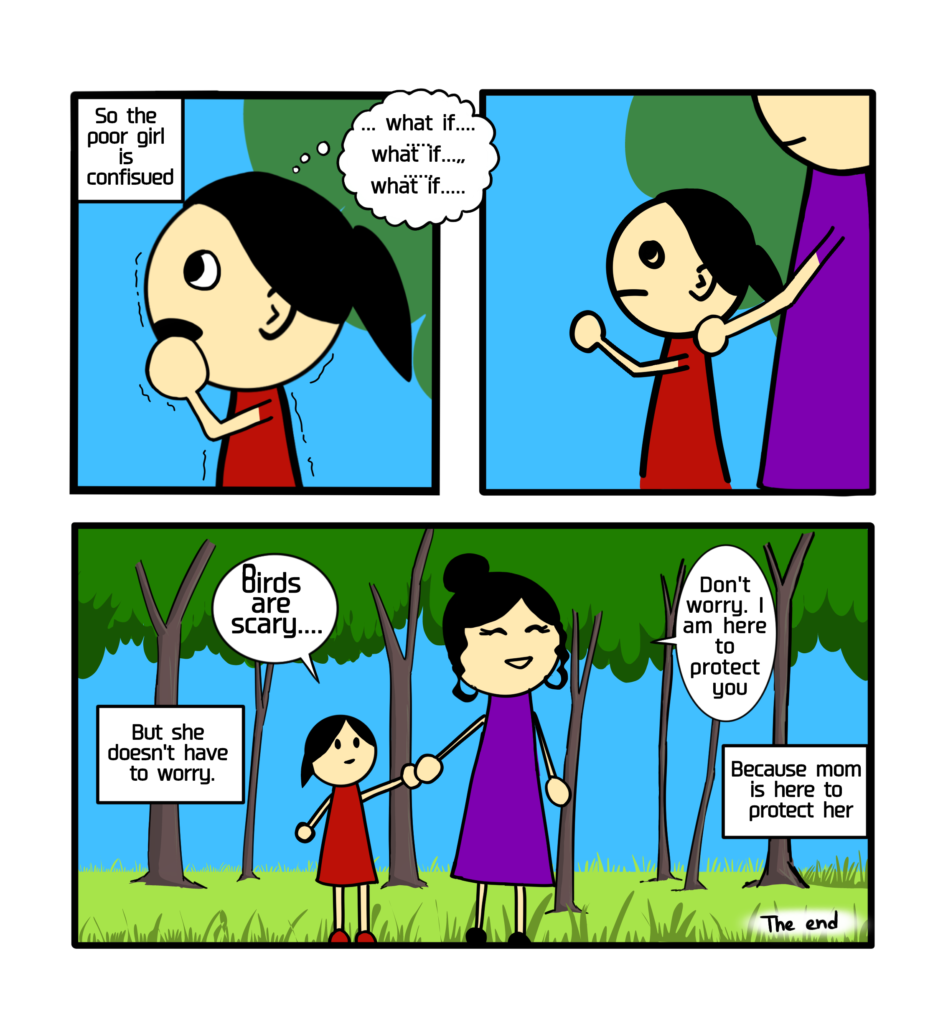
Figure 2. Comic Panels. The creative genre piece for the second audience
Short reflection
The very act of genre shifting, making scientific research, often complex, fit into quite different forms for varied audiences, was a quite eye opening and intellectually demanding process. Having to translate concepts of predictive coding and dopaminergic signaling into early-onset auditory hallucinations for high school students and young children made us rethink not just the content of what was being said but also its mode of expression and reason for being. We learned that having effective science communication is not just about jargon reduction; it is about reshaping the very manner of presenting ideas in ways that makeup for the capacities, interests, and the very emotional state of the audience.
The most striking realization was how starkly context alters comprehension. In speaking for the high school audience, some technical terms-the likes of “neurotransmitters” or “sensory prediction errors”-could be retained, provided they were backed by metaphors or illustrations. For children, those terms had to be scrapped, replaced instead with story-telling, personification of characters, and emotionally accessible scenarios. The experience taught us that engaging an audience is not simply a matter of simplifying language but rather an utter restructuring of the whole idea itself.
Of the two adaptations, writing for small children was more challenging. High school students often have some basic knowledge of biology and mental health and, therefore, more direct explanations can be given. Young children, however, need a conceptual transfiguration rather than simplification. Abstract neurological mechanisms that were represented visually had to be concretized and often made playful. We had to ensure that the content did not generate fear or confusion among the audience, more so given that the subject of mental health is a sensitive one. Attaining balance between scientific facts and emotional accessibility required creativity, great empathy, and awareness of developmental stages.
This has hugely changed the way we think about science communication. Previously, we might have regarded it simply as a translation exercise aimed at making research more understandable. We now see instead an act of empathy, adaptability, and design thinking. Effective science communication characterizes meeting people where they are, not only intellectually but emotionally and culturally as well. It means thinking like educators and storytellers and adapting our messages to resonate with different audiences.
Primarily, genre-altering assignments taught that science communication was never one-size-fits-all. Rather, it involves interdisciplinary thinking, sociocultural awareness, and imaginativeness for how the dissemination of scientific knowledge may occur. Science communication can be a powerful agent to inspire, lessen stigma, and invite public trust in science. Moving forward, we foresee ourselves more prepared and committed to the endeavour of moving science from the halls of higher learning and making it accessible, interesting, and relevant.

This entry is licensed under a Creative Commons Attribution-NonCommercial-ShareAlike 4.0 International license.

